What Is Pvod Movie? – Celebrity
 Emily Baldwin
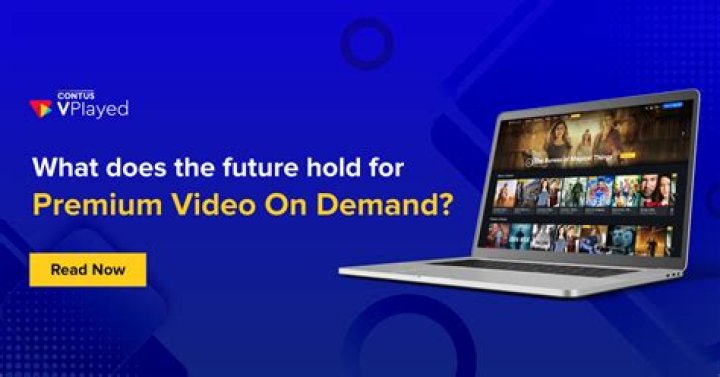
 PVOD stands for premium video-on-demand, and in a nutshell would entail new movies being available to stream within the close time frame that they are first released in theaters. From a studio perspective, the option is viewed as the best chance to combat declining DVD sales, wherein high-priced rentals would be available sooner to the public.
PVOD = Premium Video on Demand A streaming service like Netflix originally started out as an online library style service, through which you could find a huge amount of predominantly older content. This of course has completely changed with Netflix´ tremendous success and massive investment in original content production.
PVOD – Premium Video On Demand Premium Video on Demand is a form of TVOD or SVOD where the end-user can pay to get access to content sooner than other SVOD or TVOD customers would! Think of PVOD as a form of online-movie-theaters.
PVOD – Premium video on demand The pandemic has really grown this monetization model because theatres have been shut down. PVOD is different from TVOD in that the most valuable content is offered here, namely Hollywood films. This is a version of TVOD, but the cost per transaction is substantially higher.
PVOD – Premium Video On Demand Premium Video on Demand is a form of TVOD or SVOD where the end-user can pay to get access to content sooner than other SVOD or TVOD customers would! Think of PVOD as a form of online-movie-theaters. You can go see the latest movie at the theaters or wait three or four months to see them on an SVOD service, right?
Premium Video on Demand is a form of TVOD or SVOD where the end-user can pay to get access to content sooner than other SVOD or TVOD customers would! Think of PVOD as a form of online-movie-theaters. You can go see the latest movie at the theaters or wait three or four months to see them on an SVOD service, right?
AVOD, SVOD, TVOD, and PVOD are different monetization models in the Video On Demand (VOD) ecosystem and represent different ways of engaging and monetizing users on the platform. The abbreviations stand for – AVOD – Advertising VOD SVOD – Subscription VOD
Disney’s Mulan is a good example of PVOD. You needed a subscription to Disney+ and then you had to pay an additional $25 (or so) to watch Mulan first-day-first-show! But, you retained access to the movie until it because available to the rest of the Disney+ subscribers.
What is PVOD service?
PVOD is a conceptual term used to describe a service, that would include content in early windows – for example you would be able to watch a movie using a PVOD service, even when the movie was still playing in movie theaters – or very shortly after. Thus PVOD is mainly associated with services that would affect the Movie Theater industry, …
Hence, “VOD” is sometimes also used generically to describe a business model or service, that is online. Much like the term “OTT” (short for Over the Top) is used.
Video On Demand is generally associated with the ability of the consumer to select when and where to watch content. As opposed to traditional linear TV channel play-out. On Demand follows as an essential attribute of using the Internet to deliver the video.
Movie theatres provide an specific experience of a movie to be sure, but theatres are a business, which like any other has to provide its own profitable and sustainable model in the face of significant market changes.
ADVERTISEMENT
How is PVOD different from SVOD and TVOD?
The key difference between PVOD and TVOD/SVOD is that the user can pay a fee to gain access to video content before other TVOD or SVOD subscribers.
The key reason why businesses choose monetization models is their authority to create revenue from on-demand content. Content monetization also adds an opportunity to collaborate with advertisers and get a secondary revenue generation source for your streaming services.
What is the VOD paradigm?
The VOD paradigm still gives primacy to theaters; by contrast, Disney’s priorities were reflected in the decision to release “Soul” on Disney+ Christmas Day. It also means that exhibitors have a chance to learn from their mistakes.
Theaters had sole rights to films for nearly a year when the video industry began. It shrank over the decades, until it was 90-day exclusivity for DVDs and VOD. With premium VOD, access came about two weeks earlier. Like video before it, exhibitors missed that opportunity to negotiate from strength.
In Cinemark’s third-quarter earnings call November 3, CEO Mark Zoradi announced a loss of $148 million — and, going forward, theatrical windows would be a matter of case-by-case negotiation with distributors. In AMC’s third-quarter earnings statement the day prior, which included losses of $905 million, the exhibitor touted its deal with Universal as an important asset for the future.